
Master Key Installation in Schools & Dormitories
Access matrix, emergency access and a hierarchical key plan.
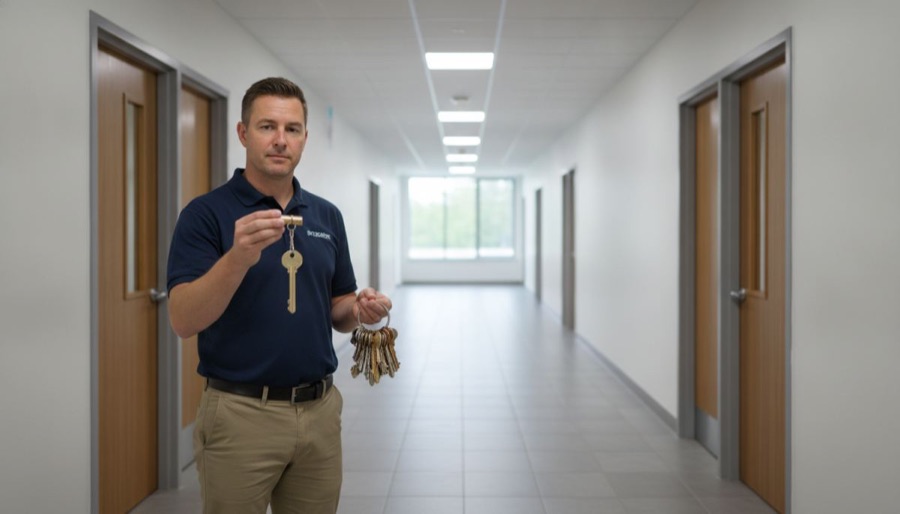
Schools and student housing need different levels of access for residents, cleaning and maintenance staff, teachers and restricted rooms such as server rooms. A master key system reduces the number of keys, speeds up emergency entry and limits unauthorised access.
Build the access matrix first
Before a single key is cut, every door is mapped to the people who need it. A typical campus uses four levels:
- Grand master key: opens the whole estate; held by senior management or security.
- Building master key: opens one building or block.
- Sub-master key: opens one floor or department; for cleaning staff or floor wardens.
- Individual key: opens one room only.
Installation step by step
- Survey the door hardware.
- Calculate pin combinations so that no key opens a door it should not.
- Assemble and test the cylinders.
- Fit and mark the cylinders.
- Hand over keys against signatures, and store emergency master keys securely.
Common pitfalls
- No room left in the key plan for future expansion
- Key blanks that can be copied anywhere
- No key audit when staff leave or change roles
Emergency exit and safety
Locks must keep unauthorised people out while letting everyone leave quickly in a fire or evacuation. Thumb-turns or panic hardware on the inside of doors, and window restrictors for child safety, are part of the plan.
Frequently asked questions
Can a student open the next room with their own key?
No. Each cylinder is pinned for its own room.
What if a sub-master key is lost?
Only the doors on that floor or department are affected, and only those cylinders need re-pinning.
Does the system work in a power cut?
Yes. It is fully mechanical.
Maintenance and audits
Service the locks at least once a year with a dry lubricant rather than oil, and reconcile cylinders and key holders regularly.