
Keyed Alike Padlock Solutions for Construction Sites
Keyed-alike padlocks that end key chaos on job sites: site security, with a single key.
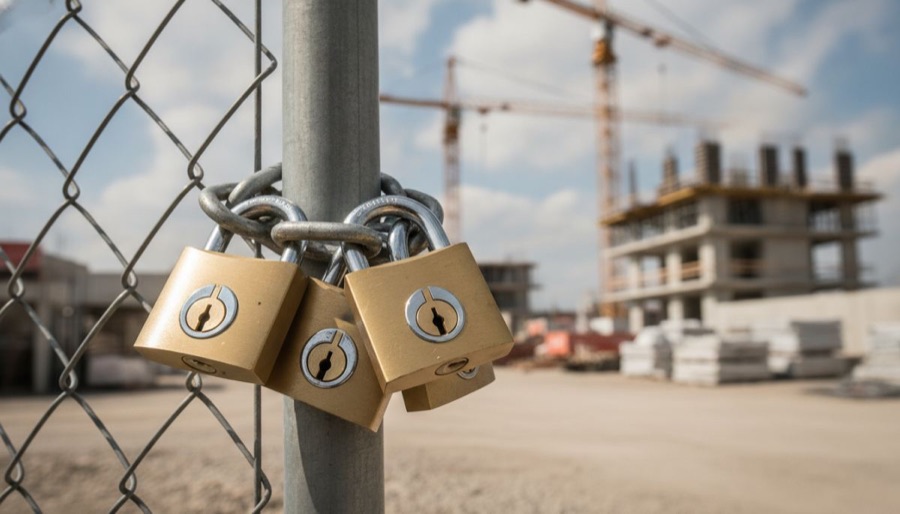
Large construction sites and industrial projects have many teams and many points to secure: material stores, site offices, generator cabins, electrical panels. Giving every lock its own key quickly turns into a key-management problem. Keyed alike padlocks are a practical standard for these sites.
Key chaos on construction sites
A site changes every week. New containers arrive, panels move, subcontractors come and go, and the number of locks keeps growing. Keys get lost or are never returned, which leads to cut padlocks, wasted working hours and unclear responsibility. Worse, a confusing key ring can delay access to an electrical or utility shut-off in an emergency.
What is a keyed alike (KA) padlock system?
In a keyed alike set, every padlock has the same pin configuration, so one key opens the whole group. This is different from individually keyed locks, where each lock has its own key, and from master key systems, where each lock has its own key and a master key opens them all. A keyed alike set can be extended later: new padlocks are simply made to the same code.
Why one key works under harsh site conditions
- Faster access for crews and supervisors
- Quicker response in an emergency
- Fewer keys to duplicate and track
- Lighter key rings for patrols and security staff
- Consistent lockout/tagout (LOTO) practice on electrical isolation points
What to look for in a site padlock
- A corrosion-resistant body, such as solid brass or laminated steel with a protective finish
- A hardened steel shackle that resists cutting
- Anti-shim design and a precise round-pin cylinder
- Protection against dust and debris getting into the keyway
Zones and access on the job site
Group the locks by trade or area, for example electrical, carpentry, plant equipment, and give each group its own keyed alike set. Site management and the safety lead can then carry a master key over all groups. Colour coding or laser-marked numbers on the padlocks make audits and handovers easier.
Frequently asked questions
Can we add padlocks to the system later?
Yes. As long as the key code is on file, new padlocks are made to the same code and work with the existing key.
If a key is lost, do all locks have to be replaced?
Not necessarily. The cylinders can be re-pinned to a new code, which is usually faster and cheaper than replacing every padlock.
How should site padlocks be maintained?
Use a dry or dust-resistant lubricant in the keyway. Oil attracts dust and makes the cylinder stiff over time.
Are keyed alike locks less secure?
No. Each padlock is as strong as an individually keyed one. What changes is who holds keys, so key control matters.
How to put it in place
- List every lockable point on the site.
- Group the points into logical access zones.
- Decide who holds which key, and keep the number of keyholders small.
- Record key handovers with a signature.
- Inspect and lubricate the padlocks on a regular schedule.